


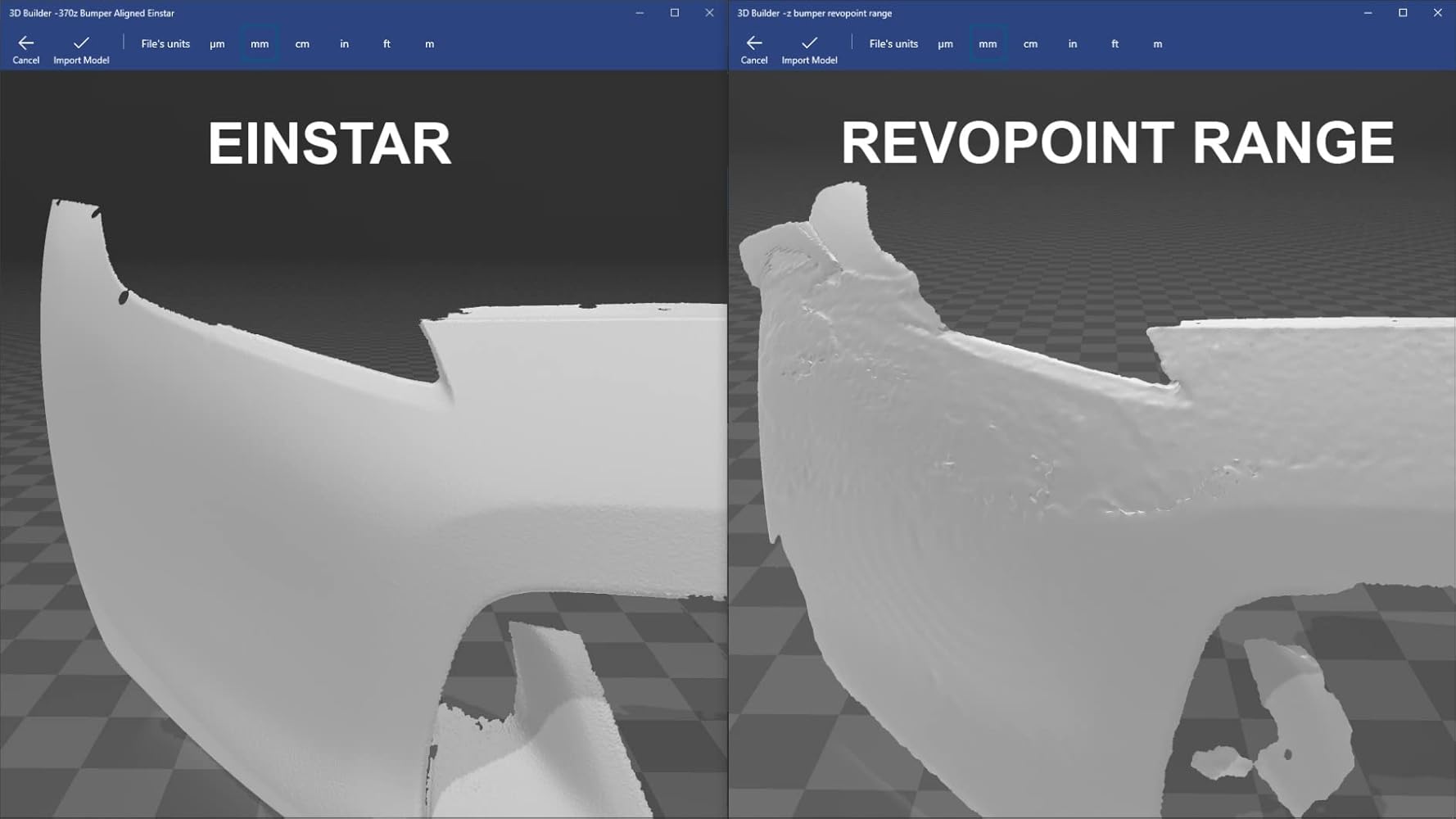
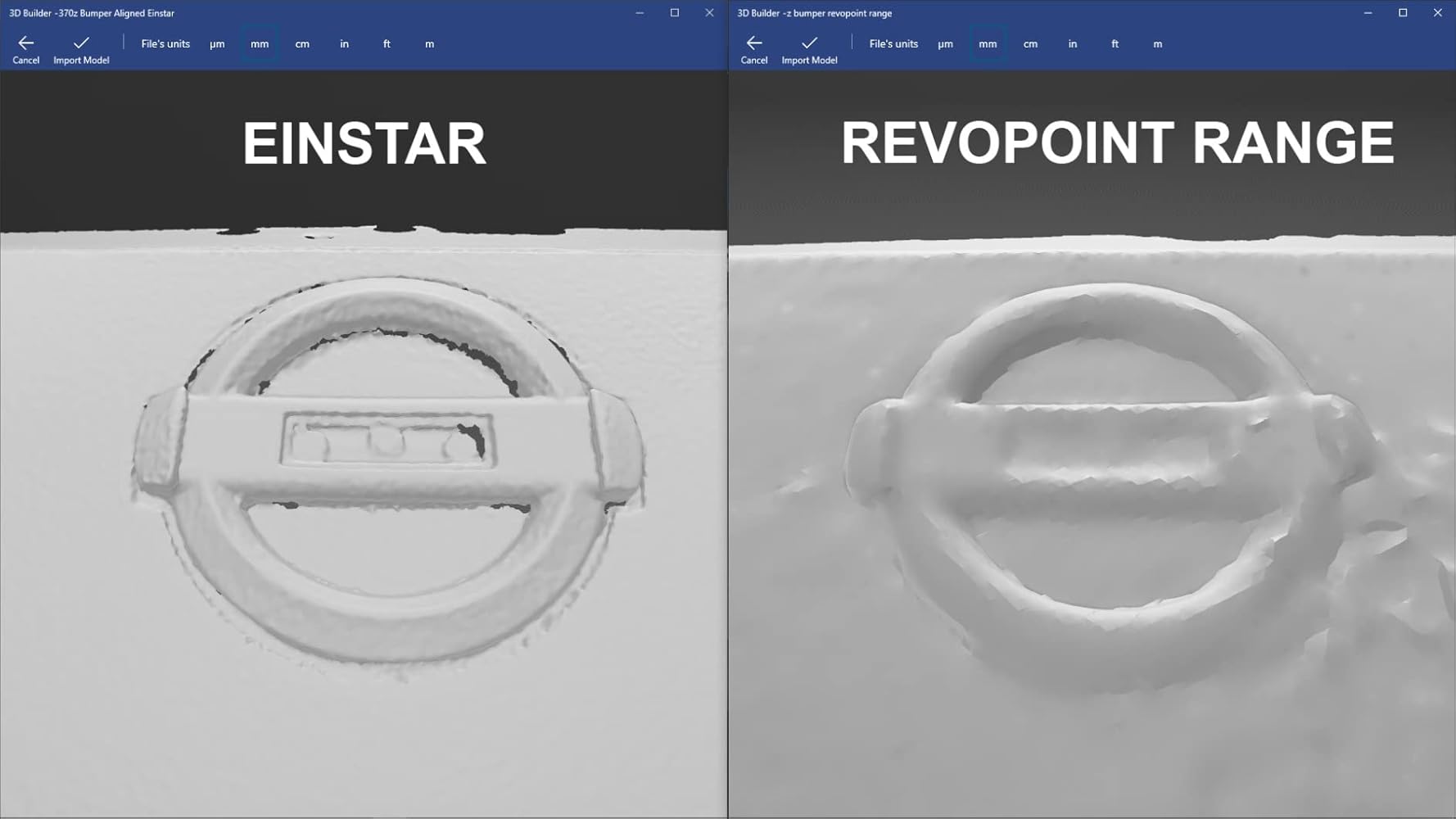
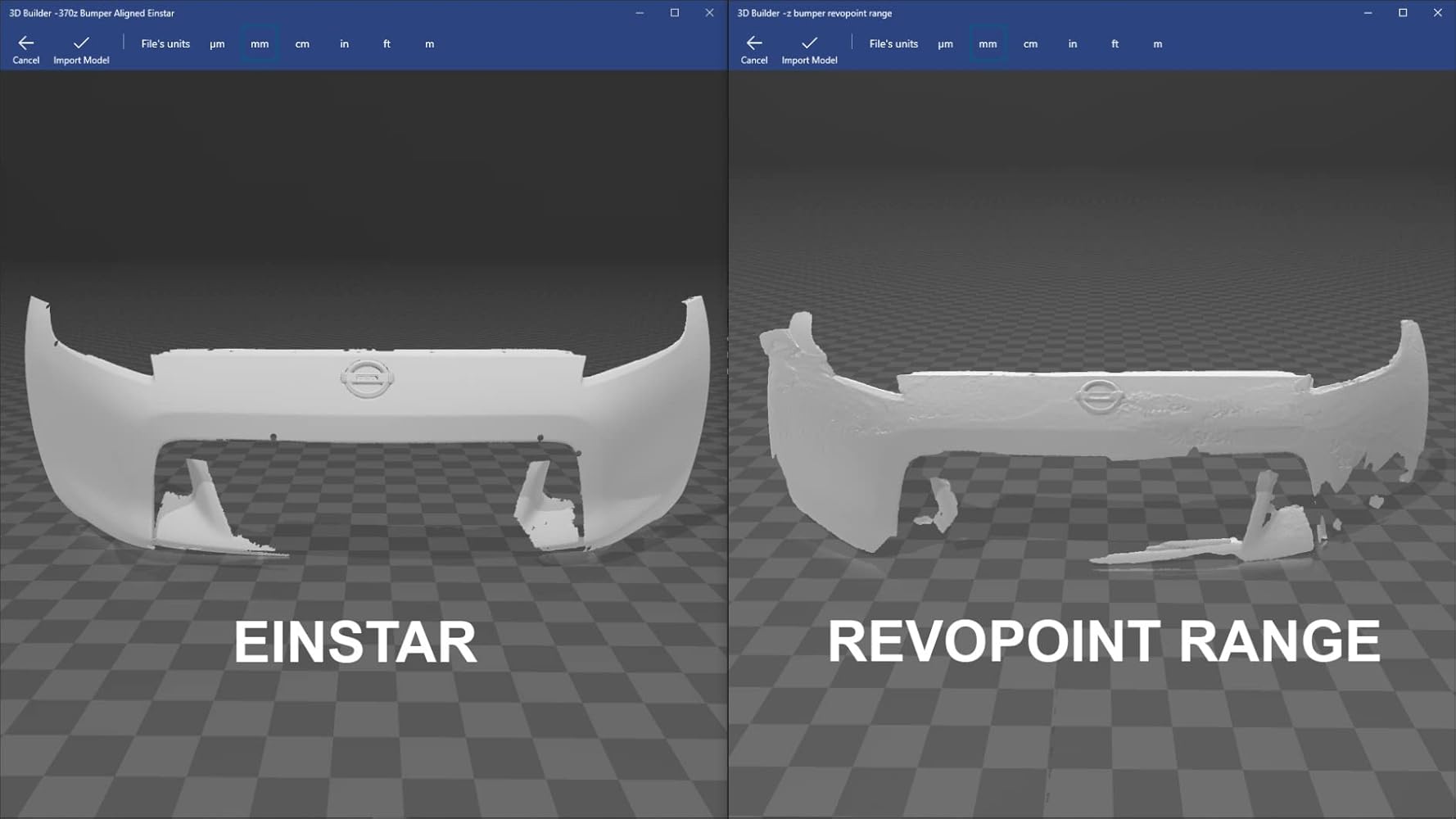
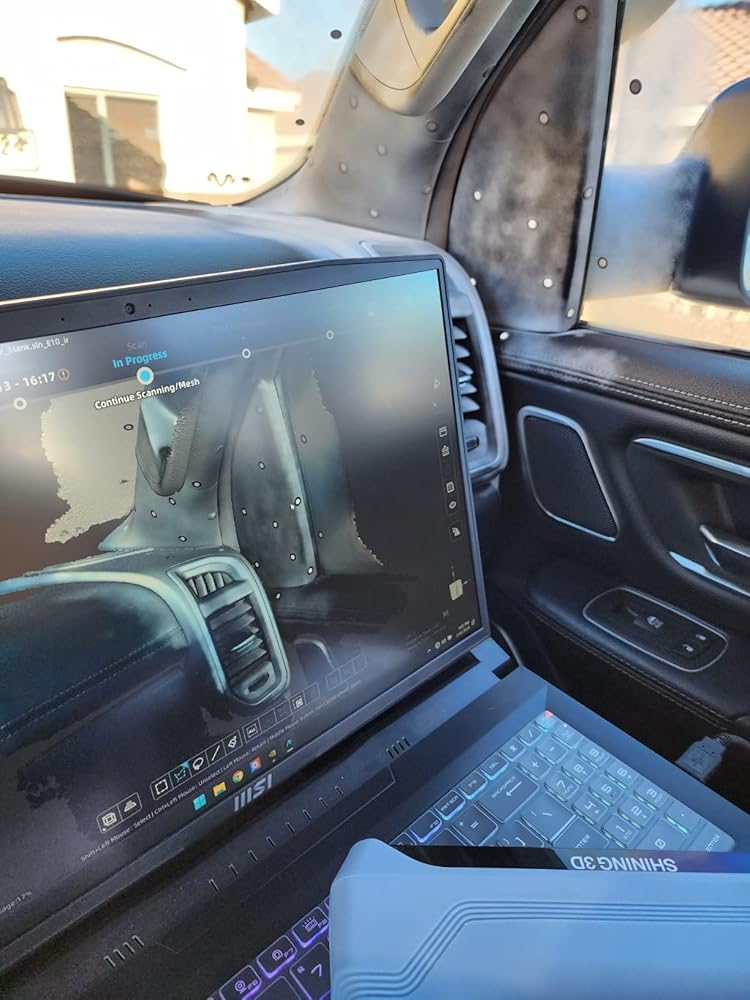
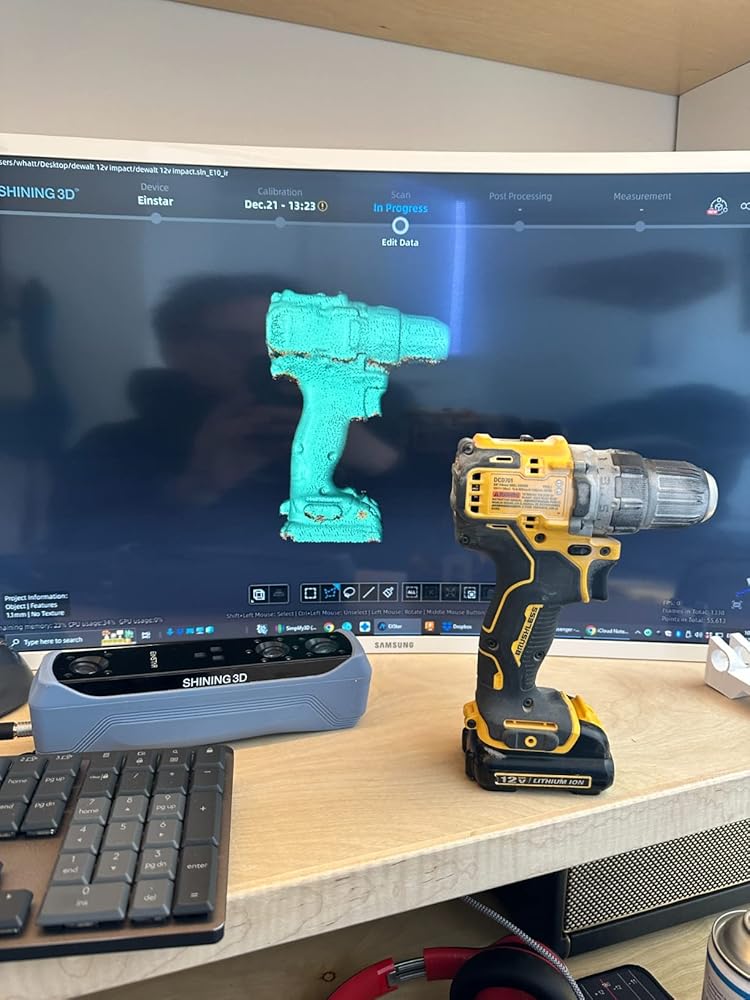
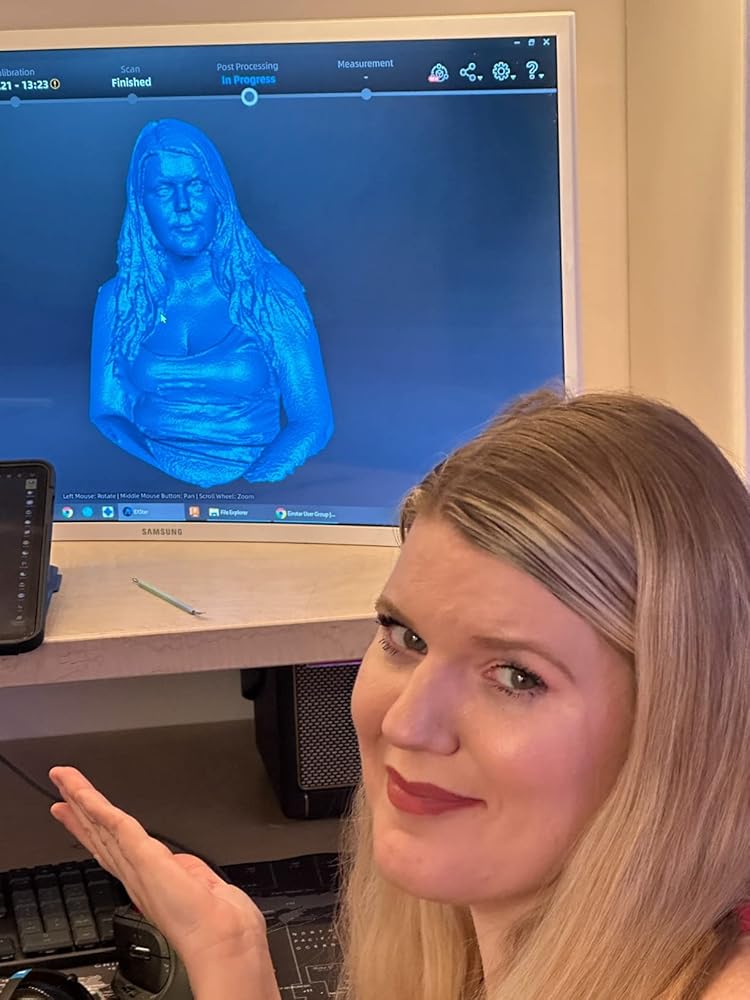
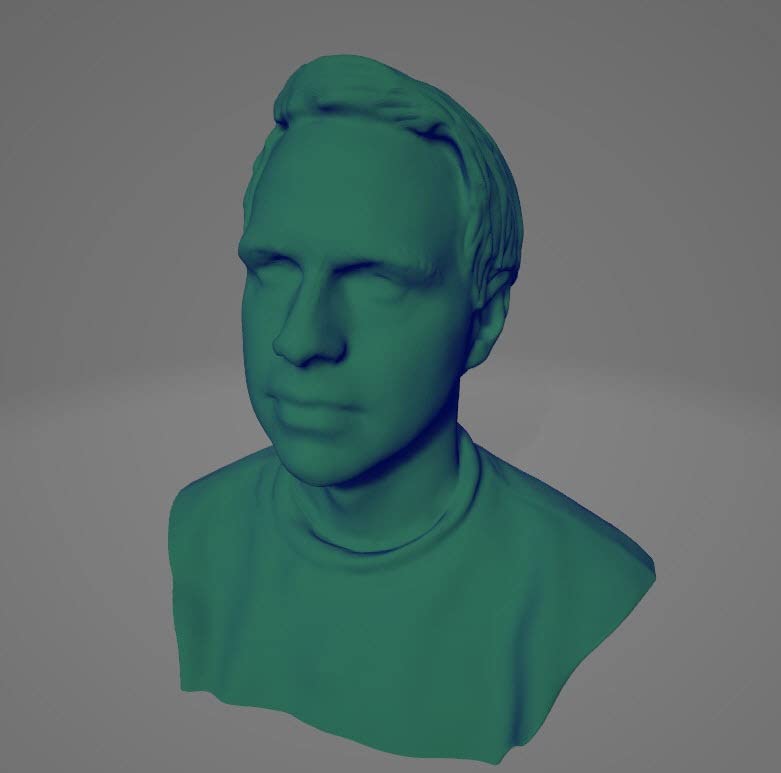


Let me tell you, as someone who's wrestled with cheaper 3D scanners, the Einstar feels like upgrading from a bicycle to a sports car. The first time I scanned my car's bumper (dark gray and shiny - basically scanning nightmare fuel), I couldn't believe how effortlessly it captured details.
The tracking is where this scanner really shines (pun intended). Unlike cheaper models that go haywire if you breathe wrong, the Einstar maintains its cool even when you pause and reposition. I've literally walked around an object three times before it even thought about losing tracking.
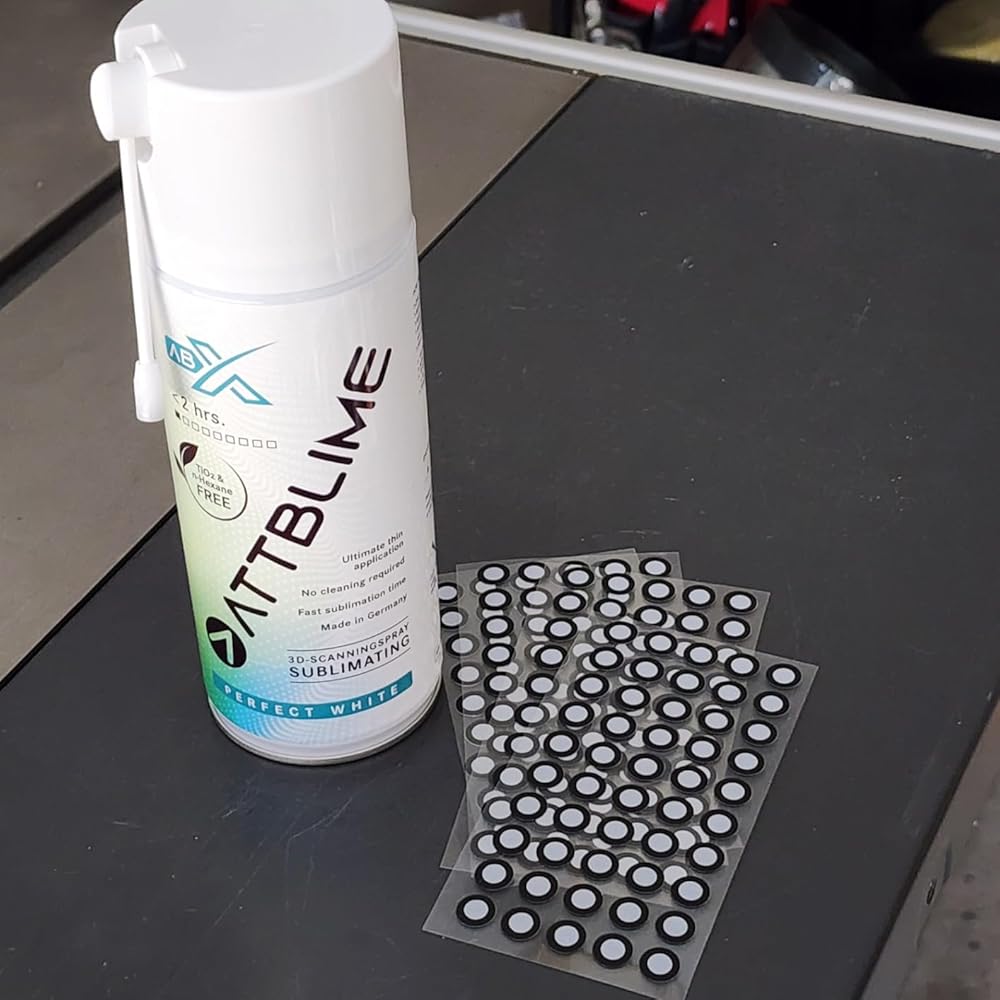
Now let's talk about the elephant in the room - yes, you'll need tracking dots and maybe some scanning spray for tricky surfaces. But here's the thing: that's true for any scanner under $30k. The magic is in how well the Einstar works with these aids compared to its competitors.
The software deserves special mention. While it's not perfect (what software is?), it's miles ahead of what comes with other scanners in this price range. The automatic alignment feature alone saves hours of frustration. Just be warned - you'll need a decent computer to run it smoothly.
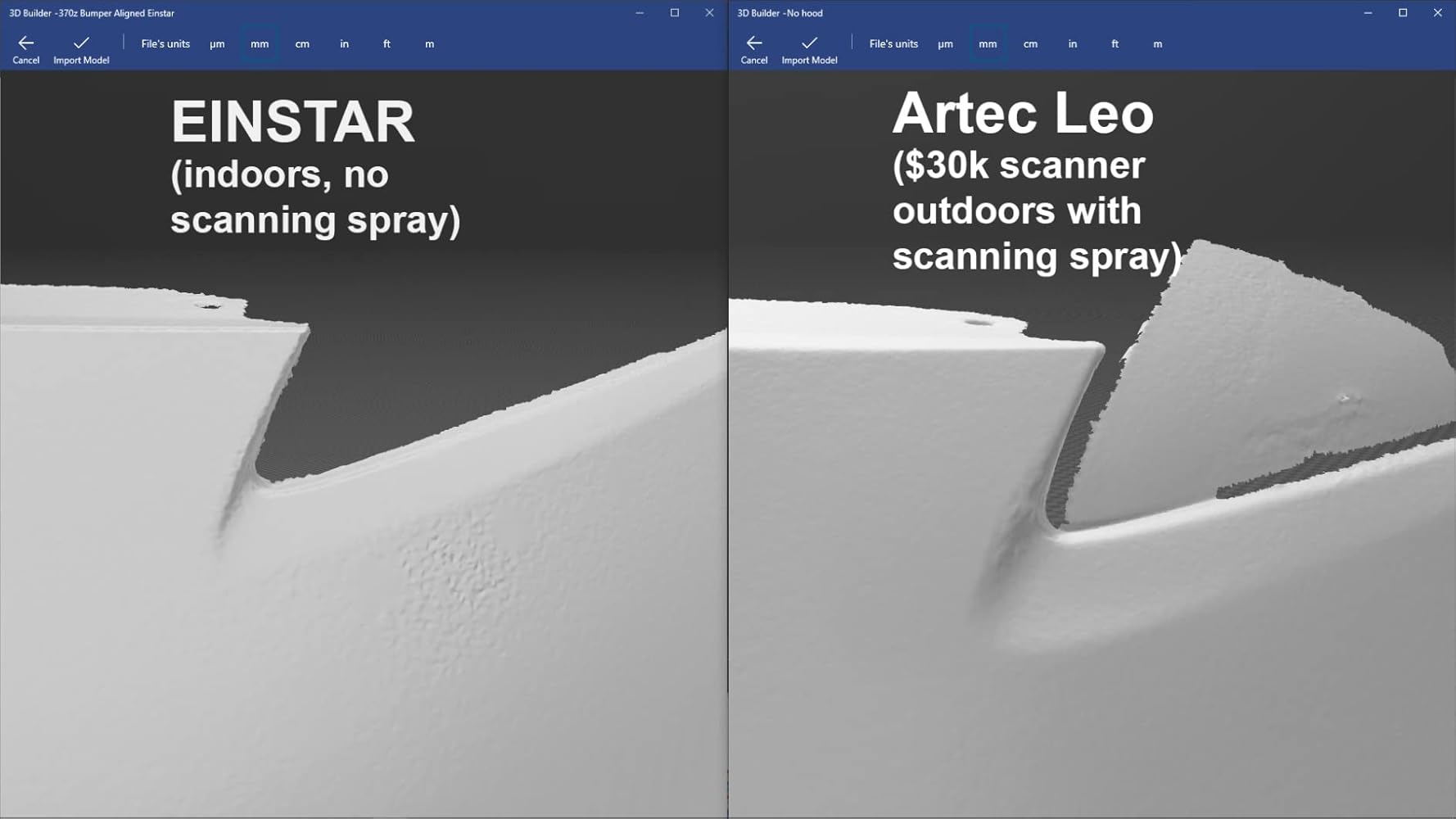
What surprised me most was how close this gets to professional results. I've compared scans done with $30k Artec Leos, and while those are definitely better, the gap isn't as wide as the price difference suggests.
Is it perfect? No. It's heavier than I'd like for extended use, and there's definitely a learning curve. But after using everything from toy-grade scanners to industrial monsters, I can confidently say this is the best value proposition in 3D scanning right now.
 Report
 Share to...


